 By
By Introduction
Industries have long been the silent engines behind civilization’s visible flourish—quietly orchestrating prosperity, innovation, and transformation across centuries. While smokestacks and conveyor belts once defined industrial grandeur, today’s landscape is as varied and textured as a masterful symphony, blending technology, sustainability, and culture into harmonious new forms. As boundaries dissolve and collaboration eclipses competition, industries stand at the epicenter of a fresh era—one where value is defined as much by adaptability and insight as by output or scale.
Beyond Boundaries: The Evolving Architecture of Industry
What once was rigidly compartmentalized—manufacturing here, agriculture there, services elsewhere—has given way to dynamic, networked ecosystems.
Redefining Sectors
-
Synergistic Ecosystems: Tech companies innovate in healthcare; agriculture embraces big data and robotics; finance converges with digital platforms. Industrial “silos” have yielded to shared spaces of mutual advancement.
-
Platform Thinking: Businesses now anchor entire networks—linking suppliers, customers, and startups in co-creative constellations rather than holding fast to solitary dominance.
-
Culture of Collaboration: Open innovation replaces secrecy, with alliances between academia, enterprise, and government birthing advancements once impossible in isolation.
Technological Renaissance: From Tools to Transformation
Technology drives today’s industrial renewal not as a mere tool, but as a transformative force permeating every layer of operation and ambition.
Pillars of the New Industrial Revolution
-
Smart Automation: Artificial intelligence, machine learning, and robotics have liberated teams from repetitive labor, enabling laser focus on creativity and strategy.
-
Data-Driven Decision Making: Advanced analytics decipher patterns from oceans of information, guiding product development, logistics, and even talent management.
-
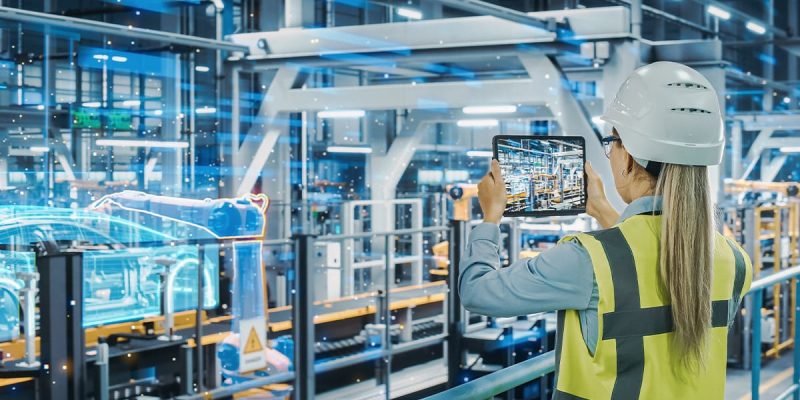
Digital-Physical Integration: The Internet of Things (IoT) marries physical machinery to digital intelligence—factories become “smart,” able to self-monitor and predict maintenance or process optimization.
-
Remote and Hybrid Work: Industries now leverage cloud infrastructure and collaboration tools, transforming not just where work is done, but how teams innovate and connect.
Sustainability: Industry’s Most Essential Virtue
In the twenty-first century, no industry can afford to treat sustainability as an afterthought—it is now the defining axis of responsibility and differentiation.
The Foundations of Responsible Industry
-
Circular Design Principles: Products and processes are built to optimize reuse, repair, and recycling, minimizing waste while opening new streams of value.
-
Transparent Supply Chains: Traceability is paramount, offering stakeholders insight into sourcing, labor, and environmental impact.
-
Carbon Accountability: Ambitious net-zero targets reshape operations, incentivizing investments in renewable energy, green logistics, and sustainable procurement.
-
Community Stewardship: Leading companies invest deeply in the communities they impact, from education and healthcare to infrastructure and economic mobility.
Table: Shifting Metrics of Industrial Success
| Legacy Marker | Contemporary Benchmark | Enduring Value |
|---|---|---|
| Output Volume | Agility & Adaptability | Resilience |
| Cost Minimization | Stakeholder Alignment (ESG) | Sustainable advantage |
| Brand Awareness | Advocacy & Experience | Deep loyalty, advocacy |
| Top-Down Governance | Empowered, Distributed Teams | Creative speed, engagement |
Talent and Culture: The Human Pulse of Industry
Despite breathtaking advancements in technology, people remain the irreplaceable heartbeat of every thriving industry.
Human-Centric Strategies
-
Continuous Upskilling: Industries invest in lifelong learning, ensuring teams stay ahead of change, not behind it.
-
Diversity and Inclusion: Cross-disciplinary, multicultural perspectives are acknowledged as indispensable sources of creativity and strategic foresight.
-
Networked Leadership: Hierarchies give way to agile teams, distributed authority, and project-based collaboration—accelerating problem-solving and fostering ownership.
-
Meaningful Engagement: Employees seek more than compensation: purpose, recognition, and impact are woven through organizational culture.
Customer as Co-Creator: Experience as Currency
The relationship between industry and consumer has undergone an irreversible shift—from providing goods to sculpting ongoing experiences.
-
Hyper-Personalization: Big data enables industries to tailor products and experiences to individual preferences, deepening relevance and value.
-
Design Thinking: Empathy and experimentation now guide how solutions are crafted, tested, and iterated in partnership with end users.
-
Feedback as Gold: Open dialogue, from reviews to innovation crowdsourcing, transforms customers into collaborators and brand advocates.
-
Transparency and Trust: Ethical business conduct, clarity of communication, and visible values cultivate enduring reputation and customer allegiance.
Globalization Evolved: From Scale to Sensitivity
Operating at a global scale is now as much about agility and contextual intelligence as about reach.
New Disciplines of International Industry
-
Localized Innovation: Products and services are tailored to regional needs, customs, and challenges—a world of “think global, act local” in practice.
-
Agile Supply Networks: Digitally tracked, multi-sourced supply chains offer resilience against shocks, from geopolitics to pandemics.
-
Cross-Border Collaboration: Knowledge, talent, and capital flow freely, enabling breakthrough innovations and sharing risk as well as reward.
-
Regulatory Foresight: From data privacy to environmental laws, navigating and harmonizing global frameworks is a new core competency.
Table: Enduring Habits of Leading Industries
| Habit | Sustained Benefit |
|---|---|
| Relentless Curiosity | Drives continuous innovation |
| Analytical Agility | Anticipates risk and opportunity |
| Narrative Discipline | Builds clarifying cohesion |
| Ethical Rigor | Fortifies trust and reputation |
| Reflective Learning | Fuels adaptation and relevance |
Conclusion
Industries are no longer silent, faceless engines; they are symphonies of interwoven innovation, stewardship, and human ambition. Their masterpieces aren’t measured solely in output, but also by impact, adaptability, and the resonance of their values. As the world faces challenges both urgent and unforeseen, it will be those industries that nurture curiosity, build trust, and weave purpose into every decision that write the next verses of civilization’s ongoing song. In such hands, industry does not merely keep time—it composes the future, one harmonious measure at a time.