By
By Introduction
Industries serve as the backbone of society—quietly constructing the scaffolding upon which progress and collective aspiration rest. Their narratives are not static chronicles of production, but living stories of adaptation, innovation, and purpose. In an age defined by complexity and interconnectedness, the very nature of what constitutes an industry is being continuously rewritten. This article embarks on an exploration of how today’s industries are both architects and artifacts of modern civilization, threading resilience, ingenuity, and responsibility into the fabric of everyday life.
Evolving Boundaries: From Static Sectors to Dynamic Networks
Traditionally, industries were delineated by clear boundaries—manufacturing here, agriculture there, and services siloed apart. The modern landscape, however, is a portrait of blurred lines and fertile intersections, where value is generated at points of convergence.
Hallmarks of the Modern Industrial Ecosystem
-
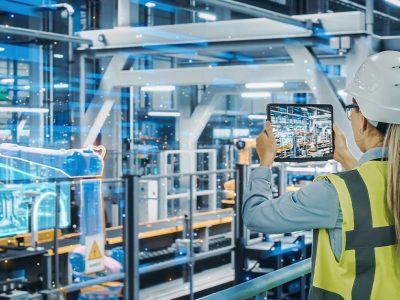
Digital Symbiosis: Technology is no longer a supporting tool but a substantive partner in every sector. Factories hum with IoT sensors, logistics rely on real-time data analytics, and even agriculture is rewritten by precision drones and AI-driven forecasting.
-
Ecosystem Partnerships: Collaboration between once-disparate fields accelerates breakthroughs—think automotive giants forging alliances with software pioneers or healthcare organizations engaging wearable tech start-ups.
-
Fluid Talent and Skillsets: The labor market now rewards adaptability, lifelong learning, and cross-disciplinary curiosity, as career paths wind between roles and even sectors.
-
Global-Local Dialectic: Industries master the blend of global scale with local nuance, customizing offerings and operations for increasingly discerning markets.
The Conscience of Industry: Sustainability and Ethics
No enterprise is immune from the imperative to create value responsibly. The pressure to operate sustainably, ethically, and with transparent purpose now weaves through all sectors.
Pillars of Sustainable Industry Practice
-
Circular Economy: Materials and energy are reimagined in closed loops, with products designed for repair, reuse, and minimal waste.
-
Decarbonization: Ambitious commitments to renewable energy and reductions in emissions have shifted from press releases to operational necessity, redefining competitiveness across manufacturing, logistics, and resource sectors.
-
Ethical Sourcing & Supply Chains: Digital traceability enables companies to assure stakeholders of both environmental integrity and social justice in every tier.
-
Community Engagement: Industry leaders invest in upskilling, infrastructure, and social well-being, understanding that their license to operate is entwined with the health of the societies they serve.
Table: Old vs. New Measures of Industrial Success
| Traditional Metric | Modern Benchmark | Strategic Impact |
|---|---|---|
| Production Volume | Adaptability, Impact | Endures through change |
| Lowest Cost | Value Alignment (ESG) | Builds loyalty/trust |
| Brand Recognition | Community Advocacy | Cultivates reputation |
| Centralized Authority | Empowered Networks | Accelerates innovation |
The Force of Technology: Orchestrating Next-Level Possibility
Technology is not simply a disruptor; it is the loom that binds new patterns of efficiency, insight, and experience across every sector.
-
Automation & AI: Routine tasks give way to automated systems, liberating human capital for creative and strategic endeavors.
-
Data as Asset: Every transaction and process now generates useable data, fueling predictive analytics, process optimization, and hyper-personalized services.
-
Blockchain & Transparency: Immutable ledgers transform not only finance and logistics, but also trust in provenance, quality, and compliance.
-
Remote Collaboration: Cloud platforms enable teams across continents to co-create solutions, iterating at a pace and scale historically unthinkable.
The Human Element: Culture and Creativity as Competitive Edge
Despite the marvels of automation, industries remain human pursuits, animated by vision, diversity, and collective drive.
Building Enduring Industry Culture
-
Culture of Learning: Organizations nurture curiosity, upskilling, and knowledge-sharing as cultural pillars, eclipsing static expertise.
-
Diversity and Inclusion: Multidisciplinary, multicultural teams outperform through richer ideation and more resilient problem-solving.
-
Empowerment: Distributed decision-making accelerates innovation and deepens employee engagement, particularly vital amid uncertainty.
-
Purpose-Driven Work: The most sought-after talent prioritizes employers whose mission aligns with personal and societal values, signaling a new way industries compete for hearts and minds.
Customer Centricity: From Products to Experiences
The rise of the empowered consumer has rendered passive production obsolete. Today’s leading industries prioritize experience, personalization, and co-creation.
-
Hyper-Customization: Advanced analytics and flexible manufacturing enable offerings adapted to individual needs, preferences, and contexts.
-
Feedback Loops: Digital channels enable real-time dialogue with customers, swiftly refining products and services.
-
Transparency: Organizations now communicate openly about sourcing, impacts, and intentions—inviting consumers as trusted partners.
Table: Future-Ready Industry Attributes
| Attribute | Manifestation | Advantage |
|---|---|---|
| Agility | Rapid pivots, scenario planning | Resilience in disruption |
| Collaboration | Cross-sector, multi-stakeholder | Expands innovation capacity |
| Trustworthiness | Transparent reporting, compliance | Sustains brand and access |
| Purpose Integration | ESG-driven strategies | Enduring stakeholder loyalty |
Glimpsing Ahead: The Next Industrial Era
-
Regenerative Models: The most progressive sectors will aim not merely to minimize harm, but to repair and uplift—whether through restorative agriculture, carbon-negative production, or inclusive social investment.
-
Real-Time Industry: AI-driven supply chains, just-in-time manufacturing, and adaptive business models will become the norm.
-
Global Citizenship: Organizations will cultivate influence—and responsibility—far beyond their home markets, operating as partners in addressing humanity’s shared challenges, from climate to health to digital equity.
Conclusion
Industries today are much more than engines of output. They are intricate, evolving mosaics—embodying vision, ethics, and purpose as central as technology, scale, or efficiency. The enterprises that will be remembered are not those that simply adapt, but those that lead the way—balancing ambition with humility, embracing the cadence of continuous learning, and weaving their innovations quietly, yet indelibly, into the unfolding story of civilization.