 By
By Introduction
Investment casting is a widely used manufacturing process known for producing complex metal components with high precision. It is commonly applied in industries such as aerospace, automotive, and industrial engineering, where accuracy and reliability are essential.
By combining detailed design with controlled production techniques, Texmo Blank ensures that each stage of the process contributes to the creation of high-quality components.
Step 1: Creating the Wax Pattern
The process begins with creating a wax model that replicates the final component. This pattern is produced using precision moulds to ensure accuracy and consistency.
Multiple wax patterns may be assembled into a cluster, allowing several components to be produced simultaneously. This improves efficiency and supports large-scale production.
Step 2: Building the Ceramic Shell
The wax pattern is coated with a ceramic material to form a strong outer shell. This is done through repeated dipping and drying cycles, which gradually build up the required thickness.
The ceramic shell must be uniform and durable, as it will later hold molten metal during casting. Proper shell formation is essential for maintaining the shape and integrity of the final component.
Step 3: Removing the Wax
Once the ceramic shell is fully formed, the wax inside is melted and removed. This creates a hollow mould that matches the exact shape of the desired component.
This step is critical, as any defects in the mould can directly affect the quality of the final casting.
Step 4: Pouring the Molten Metal
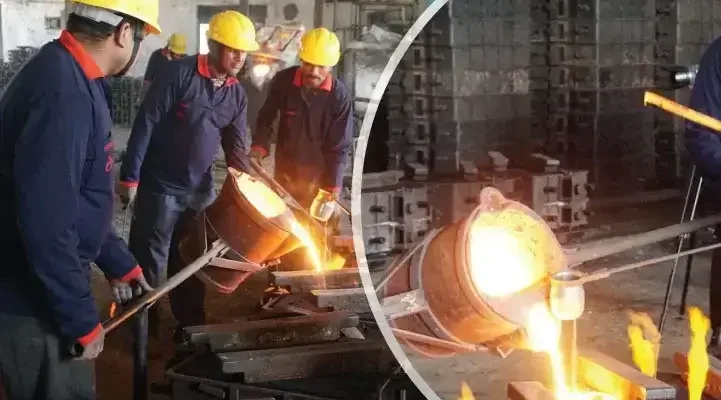
Molten metal is poured into the ceramic mould under controlled conditions. Temperature and pouring techniques are carefully monitored to ensure that the metal fills the mould completely.
Proper control during this stage helps prevent defects such as air pockets or incomplete filling.
Step 5: Cooling and Finishing
After the metal solidifies, the ceramic shell is broken away to reveal the cast component. The part is then cleaned, trimmed, and finished as required.
Additional processes such as heat treatment or surface finishing may be applied to enhance performance and durability.
Conclusion
Investment casting is a precise and efficient manufacturing process that enables the production of complex, high-quality components. Each step, from pattern creation to final finishing, plays a critical role in ensuring accuracy and reliability.
With advanced capabilities and process control, Texmo Blank delivers components that meet the demands of modern industrial applications, supporting both performance and efficiency.